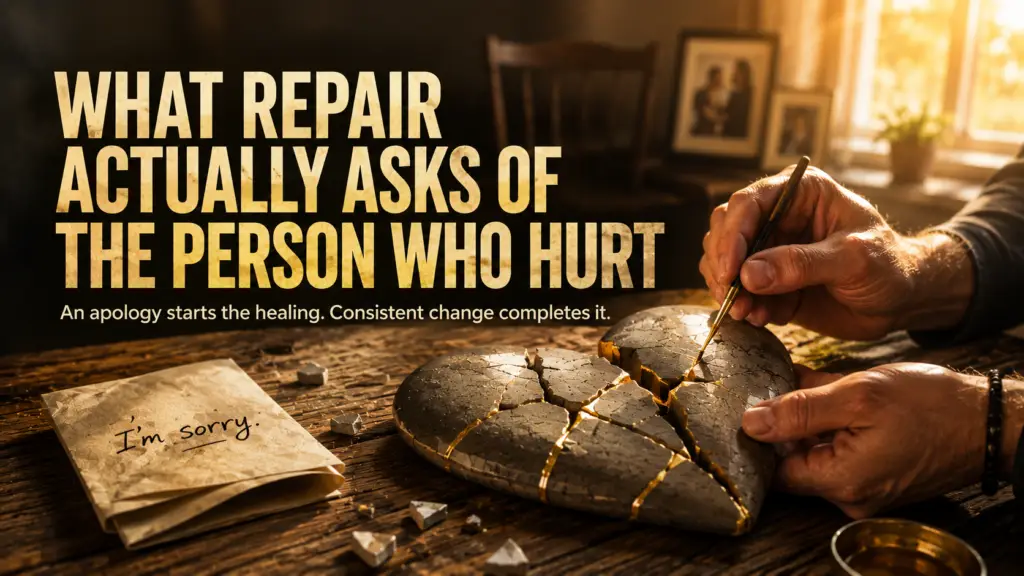

Why some apologies repair the relationship and others make it worse.
“True remorse is never just a regret over consequence; it is a regret over motive.”
— Mignon McLaughlin
Almost everyone has experienced both kinds: the apology that produced visible relief and a return to connection, and the apology that somehow left things worse than they were before. The strange thing is that the difference between the two is not necessarily in the apparent sincerity of the person apologizing. Both can be delivered with genuine feeling. Both can include the word “sorry” and the appearance of acknowledgment. But one accomplishes repair and the other does not, and the difference matters enormously for the relationship that follows.
Understanding what distinguishes the healing apology from the failed one is essential for anyone in close relationships, because over a lifetime everyone will need to apologize for many things, and the cumulative effect of how well or poorly those apologies work shapes the relationships themselves. The relationships in which repair has consistently worked become stronger across years; the relationships in which apologies have consistently failed accumulate unrepaired hurt regardless of how often the words were said.
What the Healing Apology Actually Does
A healing apology accomplishes a specific psychological function for the hurt party: it gives their experience back to them as recognized, named, and valid. Before the apology, they have been holding a private experience of being hurt by something specific that may have been minimized, denied, or treated as their problem to handle. The healing apology takes that private experience and makes it shared — the other person now sees what they saw, recognizes what they recognized, and names the harm as harm rather than as a misunderstanding or overreaction. This shift from private to shared is what produces the visible relief that healing apologies create. The hurt party is no longer alone with their experience.
This is why specificity in apologies matters so much. A vague “I am sorry for everything” does not give the hurt party their specific experience back; it leaves the experience still vague and private. A specific apology that names what happened and acknowledges its impact takes the experience and gives it back in its actual shape, validated by the person who caused it. The validation is what does the healing work. The healing apology is not primarily about expressing your regret; it is about returning the hurt party’s experience to them as recognized rather than dismissed.
What the Failed Apology Does Instead
A failed apology does the opposite of what a healing apology does. Instead of validating the hurt party’s experience, it leaves that experience contested or minimized. Instead of giving the experience back as recognized, it offers a softer or more comfortable version that the hurt party has to either accept or fight against. Instead of producing relief, it produces frustration, because the conversation that was supposed to address the hurt now contains additional friction — the friction of having one’s experience modified before it gets acknowledged.
Failed apologies often include words that look like apology but accomplish opposite functions. “I am sorry if you felt hurt” places the harm in the hurt party’s perception rather than in the action. “I am sorry but I think you also need to consider…” redirects the conversation toward their behavior. “I never meant to hurt you” centers your intention rather than acknowledging their experience. Each of these formulations may be delivered sincerely, but each one fails to do the work that an apology is supposed to do, and the hurt party usually leaves the conversation more frustrated than they were before — not because nothing was said, but because what was said failed to give them their experience back.
How to Tell Which One You Just Delivered
A reliable test for whether the apology you just delivered was healing or failed is to observe what happens immediately after. A healing apology usually produces visible softening in the hurt party — a release of tension, a return of warmth, sometimes tears, sometimes a sigh, sometimes simply a different quality of presence in the room. The relationship’s emotional temperature shifts. A failed apology usually produces continued tension, an unresolved quality, sometimes additional pushback, sometimes a quiet withdrawal that signals the hurt is still present even though the conversation has technically addressed it.
Reading these signals is part of being effective at repair. If your apology did not produce the softening you expected, the most useful response is rarely to be hurt that it did not work. The more useful response is to ask what part of the apology fell short — was it not specific enough, did it miss the actual harm, did it contain “but” or excuses, did it skip the impact acknowledgment, did it fail to commit to specific change? Often the hurt party can tell you what was missing if you ask directly: “It seems like my apology did not quite land. Can you help me see what I am missing about what hurt you?” This question itself is part of the repair, and following up the failed apology with a more accurate one is often what produces the eventual healing that the first attempt could not.
💡 Key Takeaway
The apology that heals gives the hurt party’s experience back to them as recognized, named, and validated — making private hurt shared and acknowledged. The apology that fails leaves the experience contested or minimized, often through softening formulations like “I am sorry if you felt hurt” or “I never meant to…” that center your intention rather than their experience. The signal that distinguishes healing from failed apologies is what happens immediately after: visible softening and return of warmth signals healing, while continued tension or quiet withdrawal signals failure. When an apology has failed, the most useful response is to ask what it missed rather than be hurt that it did not work, and to follow up with a more accurate version directed at the actual harm.